Collection · 14 tools
Value and Tone Tools for Artists
Value is how light or dark a color is, and it carries the drawing, the form and the light of a picture more than hue does. These value and tone tools set color aside so you can read values, simplify them and plan them. They belong to our free tools for artists, and none of them uploads your images.
Free · No sign-up · Runs in your browser
The collection · 14 tools
Value Checker
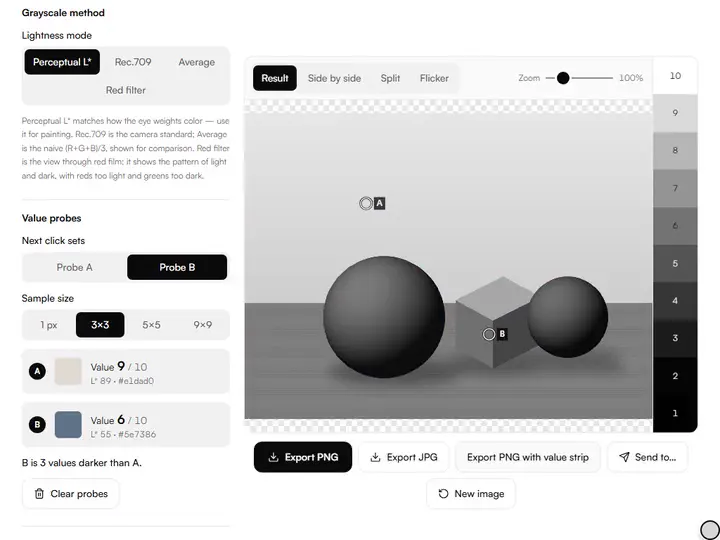
See any image in true perceptual grayscale, read values on the 1–10 artist scale, and compare your painting to its reference.
Exports PNG · JPG
Value Study Maker
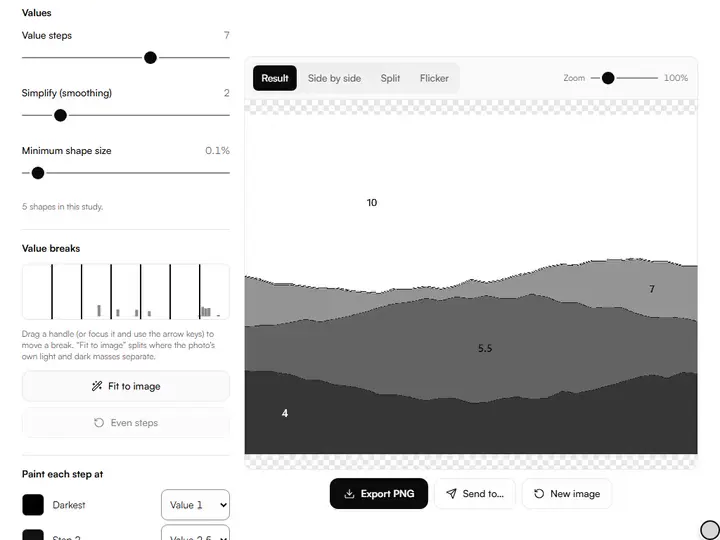
Posterize any photo into 2–10 clear value steps with custom thresholds, ready to plan or paint from.
Exports PNG · PDF
Notan Generator
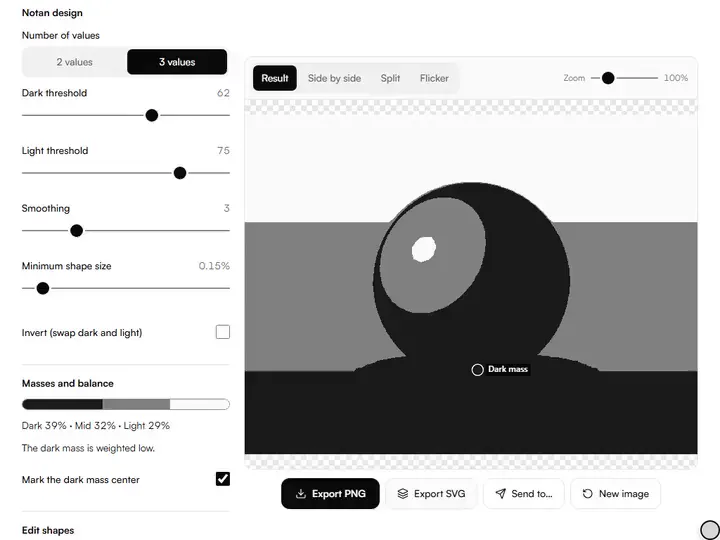
Turn any photo into a 2- or 3-value notan study to plan strong light–dark composition before you paint.
Exports PNG · SVG · PDF
Image Simplifier
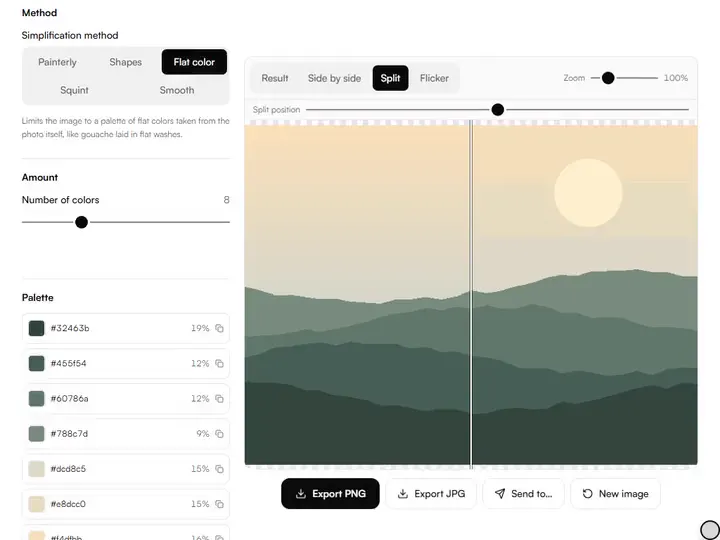
Strip photo noise and fussy detail so you can see the big shapes, colors and values worth painting.
Exports PNG · JPG
Photo to Line Art
Convert any photo into clean, trace-ready outline art with adjustable line weight and detail.
Exports PNG · SVG · PDF
Drawing Accuracy Checker
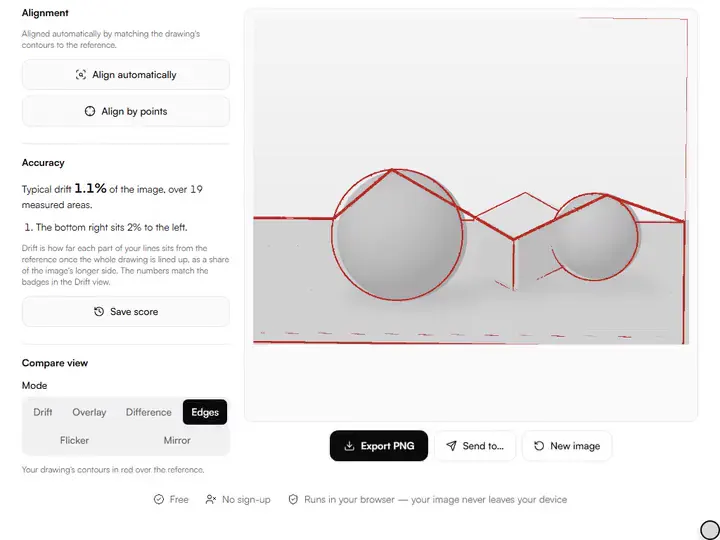
Overlay a photo of your drawing on the reference to catch proportion and placement errors early.
Exports PNG
Live Camera Studio
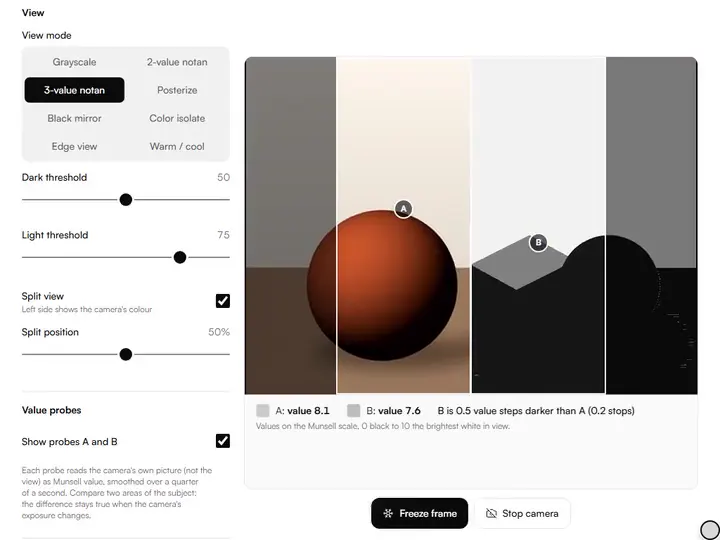
A live grayscale camera for painters: value, notan and warm/cool views, two value probes, a canvas viewfinder and frames sent to other tools.
Exports PNG
Black Mirror (Claude Glass)
A Claude glass for photos or your live camera: a painterly curve or the physics of black glass, with convex curvature.
Exports PNG
Value Range Compressor
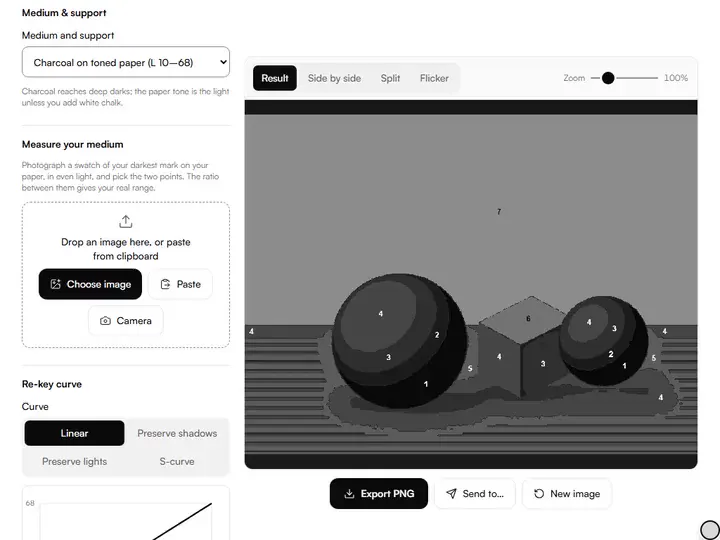
Re-key a photo into your medium's real value range, measured from your swatches, with pinned values, local contrast and a numbered map.
Exports PNG
Value-to-Pencil Grade Mapper
Label each value region with the graphite pencil grade that makes it, on a value scale calibrated from a swatch sheet you fill.
Exports PNG · PDF
Value Key Analyzer
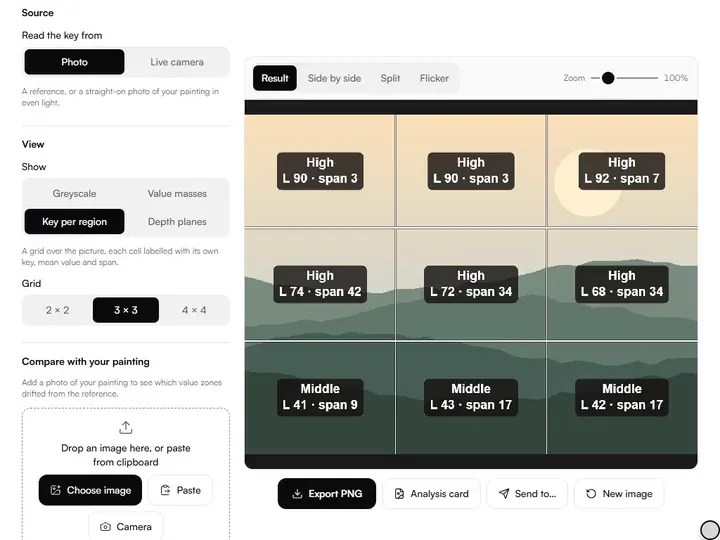
Read a painting's key, span and value masses, per region and depth plane, and its drift from the reference.
Exports PNG
Underpainting Generator
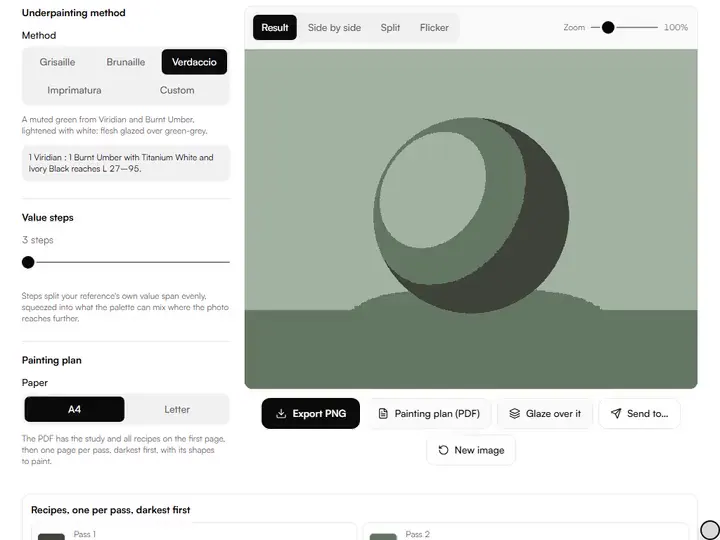
Grisaille, brunaille or verdaccio from any reference, each value step a real paint mix, planned pass by pass.
Exports PNG · PDF
Glaze Layer Simulator
Preview glazing in oil or acrylic painting: stack glazes and scumbles of 22 pigments over a photo, each mixed with Kubelka-Munk over the layer beneath.
Exports PNG
Depth & Planes Viewer
A picture's depth, estimated on your device, as flat planes under a movable light, three bands of distance and an aerial perspective preview.
Exports PNG





How they fit together
From reference photo to value plan
The value and tone tools are set out below in the order an artist reaches for them, and each is one of our free tools for artists.
A value workflow reads first and reduces second. The value checker converts a reference to perceptual grayscale and reads any point on the 1–10 scale, so the lightest light, the darkest dark and the value of the largest shape are known before anything is decided. The notan generator then cuts the picture to two or three values, which is where a composition stands or falls: a light–dark pattern that fails as a notan is not rescued by adding more values.
Once the big pattern holds, the value study maker posterizes the same reference into as many steps as the painting needs, with thresholds you move by hand, and that posterized image becomes the map you paint from. Drawing media need one more step. The value range compressor re-keys the photograph's range into what graphite, charcoal or paint can reach, and the pencil-grade map labels each region with the grade that makes it.
At the easel the loop closes on your own work. Photograph the painting, and the value key analyzer reads the reference's key, value span and largest mass, then shows whether the painting reads lighter or darker, whether its span narrowed and which value zones drifted.
Questions about value and tone tools for artists
The 3 questions below deal with tone and value as words, the number of values a study needs, and why painters squint.
Is tone the same as value?
Yes, tone is the same as value in drawing and painting: both mean how light or dark an area is. Color theory also uses tone in a narrower sense, a color mixed with gray, which is the sense the tint, shade and tone generator uses.
How many values does a value study need?
A value study needs three to five values, and a notan needs two or three. Fewer values force decisions about shape; past about seven, a study starts copying the photograph again instead of simplifying it.
Why do painters squint at the subject?
Painters squint at the subject because squinting cuts the light reaching the eye and blurs detail, so small value differences merge and only the large light and dark masses remain. The black mirror and the grayscale views in these tools do the same job without the eye strain.
More from our family